Operators & Developers
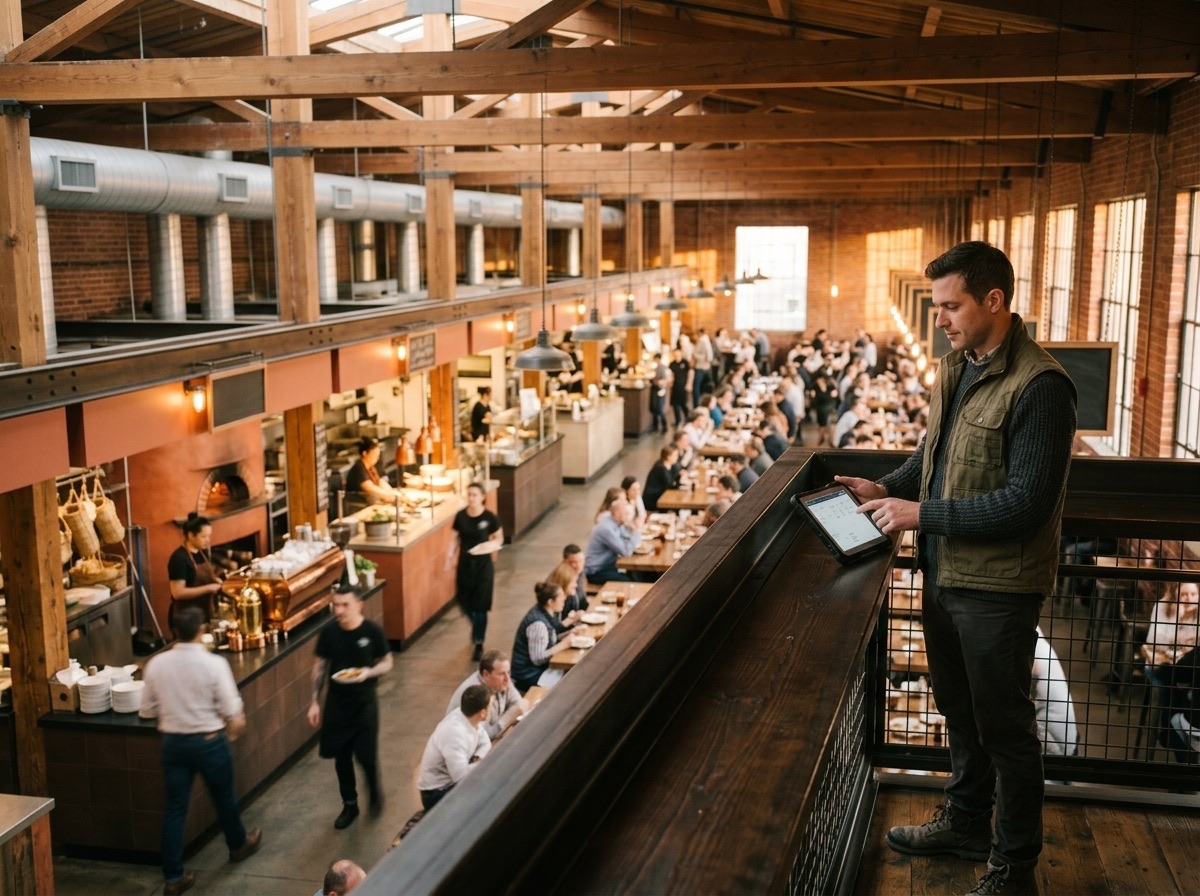
Independent operators and real estate developers building and scaling food hall concepts — the people who curate the line-up, fund the common space, and program the floor.
The Food Halls Association · Food Away From Home
The Food Halls Association helps operators, vendors, and brands navigate the rapidly expanding food-hall sector — providing industry insights, vendor matchmaking, operational best practices, and market intelligence to launch and scale successful food hall concepts.
As part of the Food Away From Home project, the upcoming Food Halls Association is addressing a growing need in the foodservice industry by helping operators, vendors, and brands navigate the rapidly expanding food hall sector. Unlike traditional food courts, which primarily feature fast-food chains in commercial spaces like malls and airports, food halls offer a curated and diverse selection of chef-driven, locally sourced, and artisanal food and beverage vendors, creating a unique and immersive dining experience. These vibrant spaces reflect local culture, emerging culinary trends, and innovative food concepts, attracting a more engaged and experience-seeking audience. The Food Halls Association will provide industry insights, vendor matchmaking, operational best practices, and market intelligence to support independent operators, food brands, and real estate developers in launching and scaling successful food hall concepts. By fostering collaboration between chefs, artisanal producers, and food entrepreneurs, the association will help shape the future of modern communal dining and create more opportunities for brands to engage with today's discerning food hall consumers.
What is a food hall
Not a food court of chains — a curated, diverse selection of chef-driven, locally sourced, and artisanal vendors under one roof, creating a unique and immersive dining experience. The Association serves all three sides of the room.
Independent operators and real estate developers building and scaling food hall concepts — the people who curate the line-up, fund the common space, and program the floor.
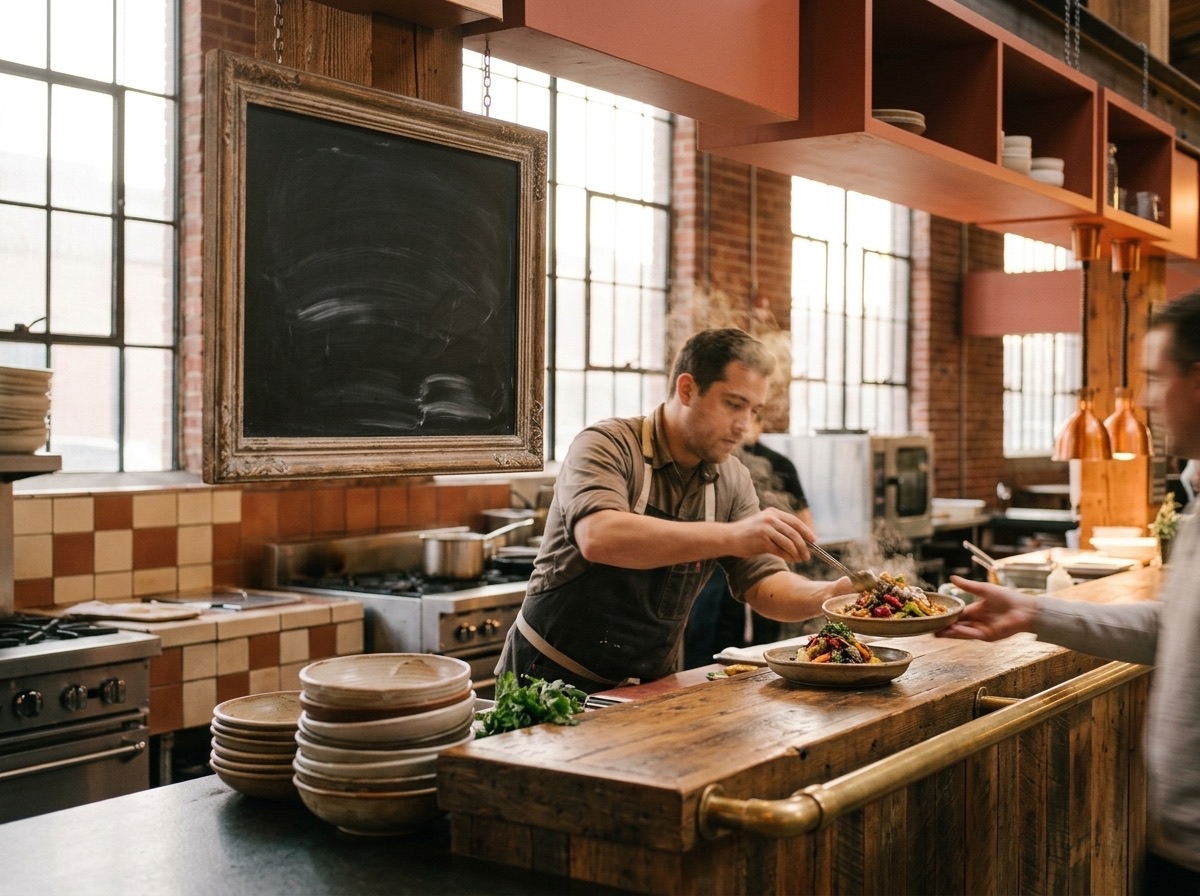
Independent chefs, restaurateurs, and culinary startups running stalls — locally sourced, artisanal, chef-driven concepts that give a hall its identity.
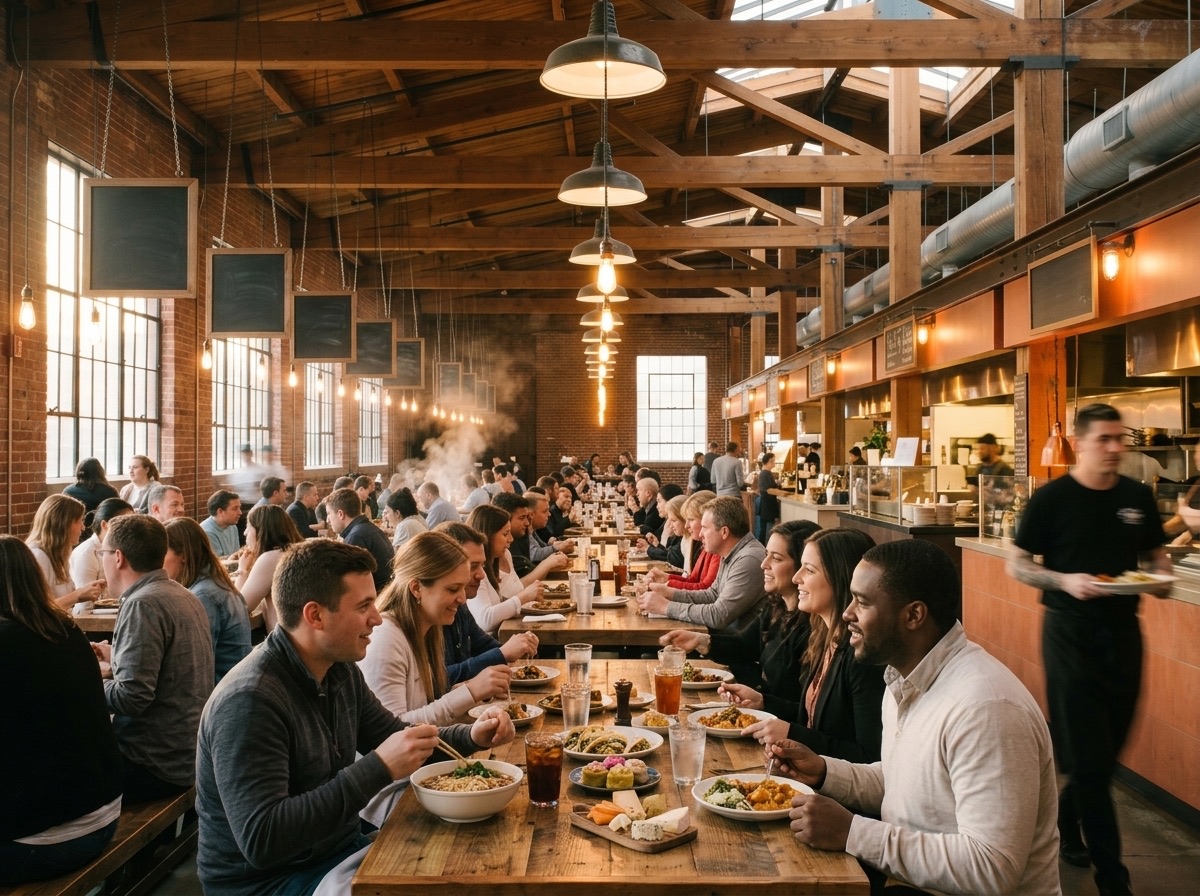
Food and beverage brands, suppliers, and the experience-seeking diners a hall attracts — an engaged audience reflecting local culture and emerging culinary trends.
How food halls operate
Food halls run on a flexible, communal, self-service model — distinct from both traditional restaurants and legacy food courts.
A focal central bar offering craft beers, wines, cocktails, and non-alcoholic beverages that anchors the overall dining experience.
Operators invite a variety of vendors — chefs, restaurateurs, and culinary startups — each offering a unique menu or concept that keeps the room fresh.
Communal seating — long tables, cozy nooks, and outdoor patios — encourages social interaction and a sense of community among diners.
Guests order at individual vendor counters, get a pager or notification, and pick up their dishes — no full table service.
Patrons mix and match dishes from different vendors, creating a personalized meal and room for culinary exploration in one space.
Why now
The proliferation of food halls in the United States has been remarkable, underscoring rising consumer demand for diverse and communal dining experiences.
Major operators have been instrumental in this expansion. Urbanspace — originating from London's Camden Lock in the 1970s — has evolved into the largest food hall operator in the United States, managing over 220 kitchens across seven cities. Major Food Group has established a global empire exceeding forty restaurants, private clubs, bars, and hotels. This rapid growth signifies a lasting shift in consumer dining preferences toward variety, quality, and communal environments.
Where the sector is heading
The halls that win aren't the biggest — they're the best curated and the most adaptable. These are the dynamics operators and vendors are building around now.
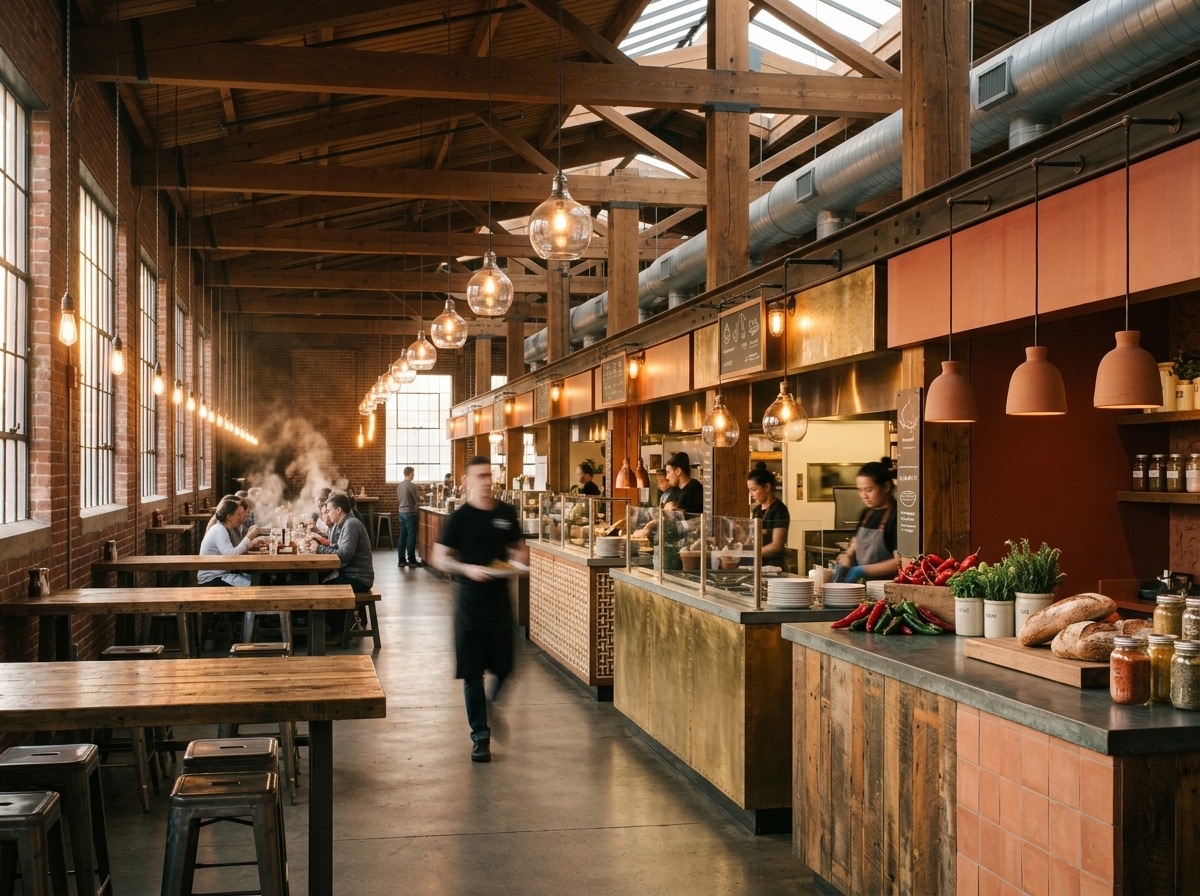
The mix of concepts is the brand. Operators curate for cuisine range, daypart coverage, and dietary breadth — and refresh the roster on purpose.
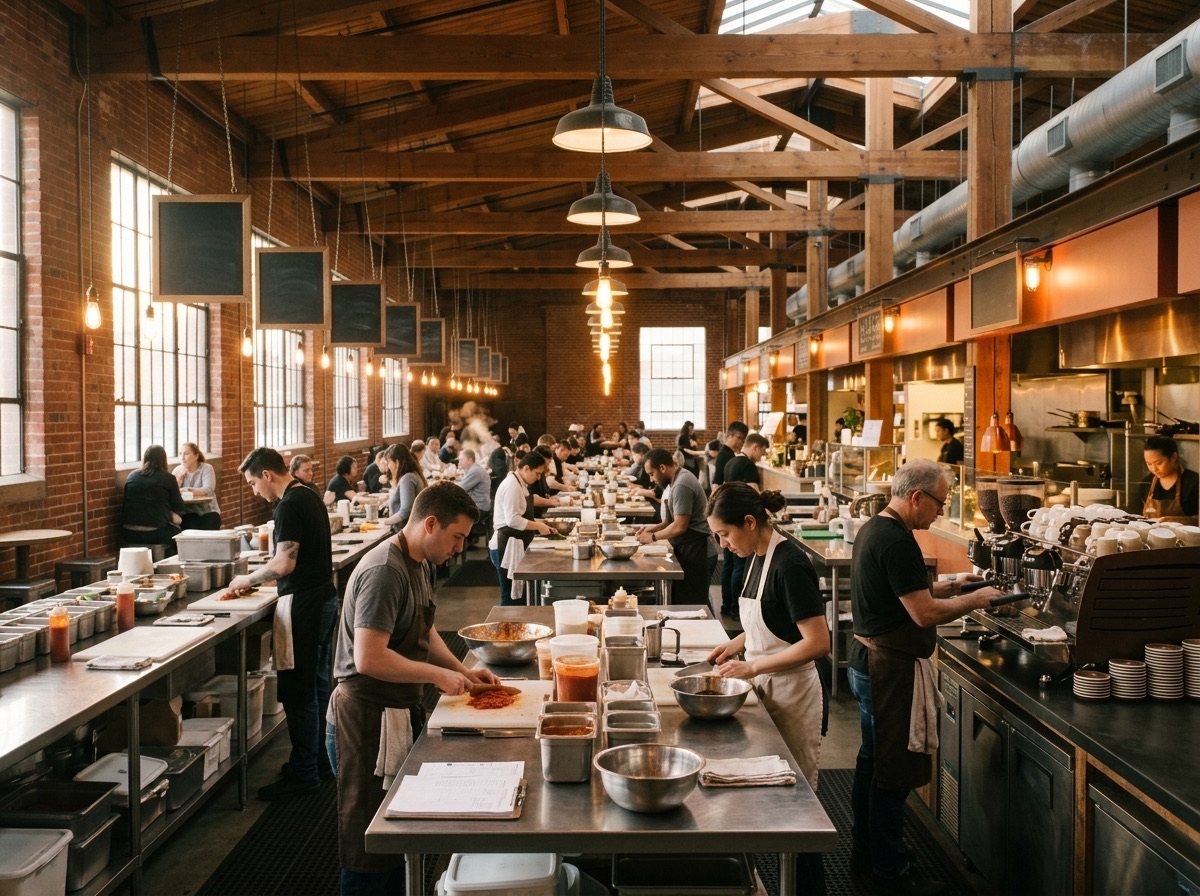
Commissary prep, shared cold storage, and ghost-kitchen capacity let vendors run leaner and add delivery and catering channels.
Foot traffic now moves across the whole day — morning counter service, midday crowds, family dinners, and a late social scene.
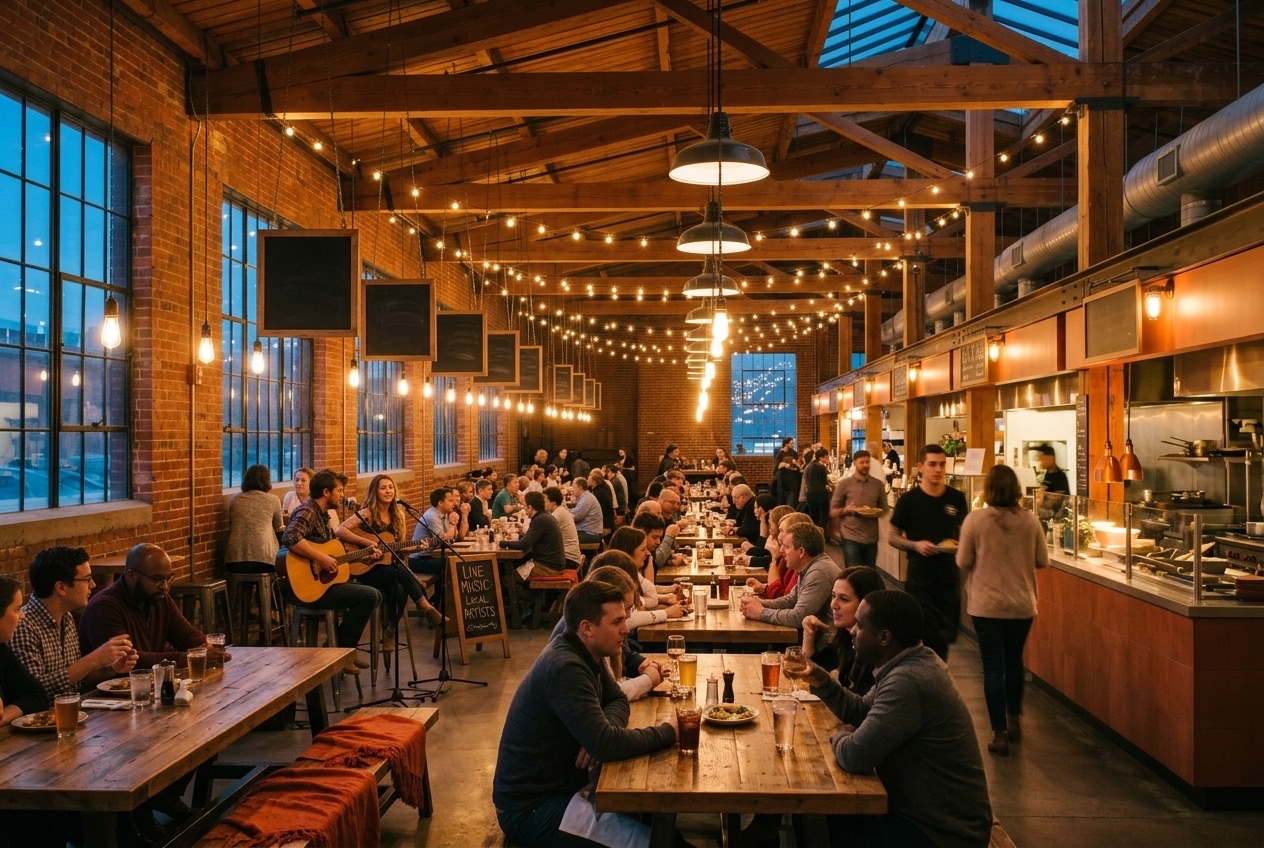
Live music, maker markets, tastings, classes, and private buy-outs turn common space into a second revenue line and a reason locals return.
What a trade association does for its members
Setting up a trade association for any business group is common and important — a voice for the industry in local, state, and national matters, and a source of benefits and opportunities for members, including:
Who would be ideal members
The Food Halls Association brings together everyone with a stake in the success of the food-hall sector.
Owners and operators of food halls — both independent and chain-operated businesses.
Representatives from the individual food vendors and restaurants within the halls.
Developers and property owners who build and manage spaces that include food halls.
Companies that provide food, beverages, equipment, and supplies to halls and their vendors.
Professionals specializing in the design, layout, and construction of food halls.
Manufacturers and distributors of food and beverage products featured in food halls.
Educational institutions offering culinary and hospitality programs and training resources.
Professionals specializing in marketing, public relations, and branding for food halls.
Experts who offer guidance on food hall management, operations, and best practices.
Banks, investors, and financial advisors who provide funding and services to food hall businesses.
Companies offering technology solutions and POS systems tailored to food service.
Local or regional associations dedicated to promoting and supporting the food hall industry.
Representatives focused on promoting sustainable practices within the food service industry.
Organizations promoting tourism and local attractions, as food halls help attract visitors.
Representatives from food hall associations elsewhere to share best practices and insights.
Critics, bloggers, and influencers who help promote food halls and provide valuable feedback.
Government agencies responsible for food safety and health regulations.
Professionals and companies that use food halls as venues for events and catering.
Customer advocacy groups and surveys gathering feedback and insights from food hall visitors.
Lawyers and legal experts specializing in food service and hospitality law.
Joining the association
The Food Halls Association is now forming. Founding members help shape the agenda from day one.
Tell us who you are and your role in the food-hall sector — operator, chef, developer, supplier, or partner.
We match you to the right membership track and the benefits, working groups, and resources that matter to you.
Join the network — insights, vendor matchmaking, best-practice exchanges, and advocacy with a unified voice.
As a founding member, weigh in on priorities, standards, and programming as the association takes shape.
Insights & resources
Field notes, operator interviews, and the data behind the model — built for the people launching and scaling the next communal dining destination.
From 220 venues in 2019 to roughly 360 by 2023 — what's driving 55% growth and where the next openings are concentrated.
Central bar, rotating vendors, communal seating, and self-service ordering — the operating model that sets halls apart from restaurants and food courts.
How live music, maker markets, tastings, and private buy-outs turn common space into a second revenue line — and a reason locals keep coming back.
Become a member
The Food Halls Association is now forming. Tell us who you are and how you fit the food-hall ecosystem, and we'll be in touch about founding membership.
Prefer email? Write us at dennis@conzumables.com.